
Blog
Plastering Estimates in Peabody, MA: What to Check Before You Sign
Getting plastering estimates in Peabody, MA is easy. Reading them is the hard part. Two quotes for the same room can look nothing alike, and the difference is rarely about the final wall. It is about what each quote leaves out.
This guide shows what goes into a plastering quote, what a complete written estimate should list, and the red flags to watch for. You will not find a price here, and that is on purpose. Every wall is different, and the only honest number is one written for your home.
Plastering estimates in Peabody, MA: what a complete quote includes
A complete estimate tells you exactly what will happen in your home, in what order, and with which materials. It is a plan on paper, not just a total at the bottom. If you can read it and picture the job from day one to cleanup, it is a solid quote.
Here is what a full written estimate should list:
- Scope of work: which rooms, walls, and ceilings are included, and which are not.
- Prep and repairs: patching cracks, fixing damaged areas, taping, and protecting floors and furniture.
- Materials by name: the type of plaster or skim coat, the primer, and any bonding agent.
- Finish level: smooth, lightly textured, or decorative, so you know what you will see on the wall.
- Timeline: a start window, how many days on site, and drying time between steps.
- Cleanup: who removes debris and dust, and how the space is left.
- Payment terms: when payments are due and what triggers each one.
Professional plastering services should be easy to explain in plain words. If a contractor cannot say what is in the quote, that is worth noting.
What changes the size of a plastering job
The same trade can mean very different amounts of work. These are the factors that make one job bigger or smaller than another, and why your neighbor’s quote may not match yours.
Size of the area
More wall and ceiling surface means more material, more labor, and more days. A single accent wall and a full first floor are not the same project. Ceilings take extra effort because the crew works overhead and the material has to be applied evenly against gravity.
Current condition of the surface
Smooth, sound walls are quick to prepare. Walls with cracks, loose plaster, water stains, or old wallpaper glue need repair first. Skipping that step is how new finishes crack again within a season.
Prep and repairs
Prep is often the largest part of the work and the least visible. It includes cleaning, patching, sanding, priming, and masking. A quote that skips prep can look cheaper, but the wall will show it later.
Materials and finish chosen
A smooth skim coat for modern walls is a different process from a full plaster system or a decorative finish. Each one uses different materials, steps, and drying times. Your estimate should say which one you are getting.
Access, stairs, and height
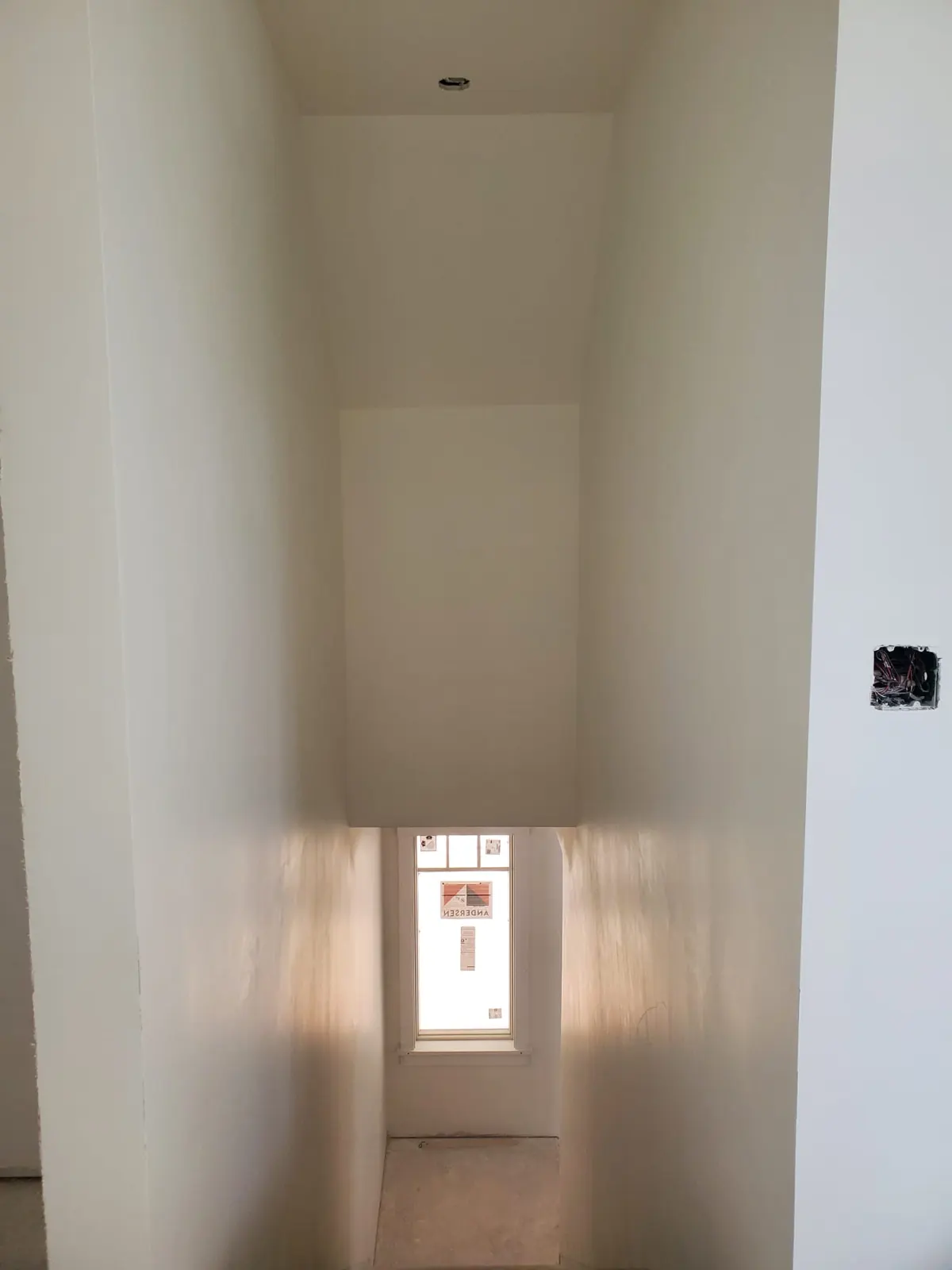
Tall stairwells, vaulted ceilings, and tight rooms need scaffolding or special setups. That takes time to build and move. Narrow access also slows down material handling.
Moving furniture and protecting your home
Rooms full of furniture take longer to prepare. Ask who moves what, and how floors, trim, and nearby rooms will be covered.
Timeline and scheduling
Plaster needs time to dry between coats. A rushed schedule can hurt the result, and a tight deadline can change how the job is planned. Tell your contractor early if you have a move-in date or an event.
How to compare plastering quotes side by side
Comparing two quotes only works when they describe the same job. Before you look at anything else, line up the scope. If one quote covers prep and the other does not, they are not comparable.
Match the scope first
Put the quotes next to each other and check room by room. Are the same walls and ceilings included? Is the same finish named? Differences here explain most gaps between quotes.
Check the materials
Look for product names or at least product types. “Plaster supplies” is vague. A named plaster, primer, and finish coat is specific. Vague material lines are where shortcuts hide.
Look at the prep list
Does the quote mention crack repair, sanding, priming, and protection? A short prep list on a long job is a signal to ask questions.
Ask about the timeline
A clear quote gives a start window and a number of working days. It also mentions drying time. If it only says “quick turnaround,” ask what that means.
Confirm what happens if the scope changes
Hidden damage behind a wall can change the plan. A good contractor explains in advance how changes are handled and approved in writing. You should never be surprised by extra work you did not agree to.
For a deeper look at this topic, read our guide on how to compare plastering quotes, and our breakdown of what goes into a plastering project.
Red flags to watch for before you sign
Most bad plastering experiences start with a weak quote. These warning signs are easy to spot once you know them.
- No written quote: a number over the phone is not an estimate. Get it on paper.
- Vague scope: lines like “plaster walls” with no rooms, no prep, and no finish named.
- Pressure to decide on the spot: a good contractor lets you read, compare, and think.
- No mention of prep or cleanup: these steps take real time and should be listed.
- No timeline: if there is no start window or schedule, delays are more likely.
- Large payment demanded upfront with no details: payment terms should match the work stages.
- No questions asked about your home: a real estimate needs a look at the walls.
Older homes need extra care
Many North Shore homes were built before 1978. The U.S. Environmental Protection Agency notes that homes built before that year may contain lead-based paint, so older walls call for lead-safe work practices. You can read the basics on the EPA lead safety page. Ask any contractor how they handle older surfaces and dust control.
Know the industry standard for finish quality
The Gypsum Association publishes industry guidance on how gypsum board and related surfaces should be applied and finished. You can browse their resources at gypsum.org. Finish levels are a useful way to ask your contractor exactly what result you will get.
Questions to ask before you say yes
A short list of questions can tell you a lot. Ask them at the walkthrough, and write down the answers.
What exactly is included in this quote?
Ask the contractor to walk each room with you. Hearing the plan out loud often reveals gaps in the written version.
Is the crew licensed and insured?
Boston Strong Plastering is licensed and insured in Massachusetts, and you should expect the same from anyone working in your home. It protects you and documents the work.
How will you protect my home?
Plastering creates dust and moisture. Ask about floor covers, room sealing, and daily cleanup.
How long before I can paint?
Plaster must dry before it is primed and painted. A thin skim coat usually needs at least a day, while thicker work can need several days. Painting too early can cause blotchy color and peeling. If you want one team for the whole project, see how a painting contractor can pick up right after the plaster dries.
Who do I talk to if something comes up?
Get a name and a direct line. Clear communication during the job is as important as the quote itself.
How should I prepare my home?
A little prep on your side saves time on the crew’s side. Our guide on how to prep your home for a drywall or plastering project covers what to clear, cover, and plan for.
Why a free estimate is the only way to know your price
No article can tell you the cost of your project. Prices change from job to job and over time, and the right number depends on your walls, your finish, and your schedule. That is why we do not post figures here.
What we can do is look at your home, listen to what you want, and write a clear quote. If you are also thinking about local work, our team handles plastering and drywall in Peabody and nearby communities, so you can book one visit for the whole scope.
Compare what we write with any other quote. If ours is more detailed, that is the point.
FAQ
Common questions from homeowners comparing plastering quotes.
How much does plastering cost?
It depends on the size of the area, the condition of the walls, the prep needed, the materials, and the finish you choose. The only reliable answer is a written quote for your project, so request a free estimate and we will price your actual walls.
How much plastering can be done in a day?
It depends on the room size, the system used, and how much prep is needed. A small room may be coated in a day, while larger areas take several days because each coat needs drying time. Your estimate should list a realistic timeline.
How long does plaster take to dry?
Thin skim coats often feel dry within a day, but full curing takes longer, and thicker plaster can need several days. Humidity, temperature, and airflow all change drying time, so follow your contractor’s guidance.
How long should plaster dry before painting?
Wait until the plaster is fully dry and has been primed as your contractor recommends. For many skim coats that means at least a day, and thicker work may need several days. Painting too soon can cause blotches, peeling, or uneven color.
What should plastering estimates in Peabody, MA include?
A good estimate lists the rooms and surfaces, prep and repairs, materials by name, the finish level, a timeline, cleanup, and payment terms. If any of these are missing, ask for them in writing before you sign.
Are you licensed and insured?
Yes. Boston Strong Plastering is licensed and insured in Massachusetts under an HIC registration. Ask any contractor for proof before work begins.
Related Posts
- How to compare plastering quotes
- What goes into a plastering project
- How to prep your home for a drywall or plastering project
- Skim coating for smooth, modern walls
- Professional plastering services
Ready for a clear, written quote?
If you are collecting plastering estimates in Peabody, MA, let us give you one you can read line by line. We come to you, walk the job, and put the scope, materials, and timeline in writing.
Prefer to call? +1 (508) 689-8709