
Skim coating is a thin layer of joint compound or veneer plaster applied across an entire wall to erase texture, patch unevenness, and create a perfectly smooth, modern surface. It’s how contractors turn dated, bumpy, or imperfect walls into the flat, seamless finish today’s homeowners want, without tearing anything out. If your walls look tired under good lighting, skim coating is almost always the fix.
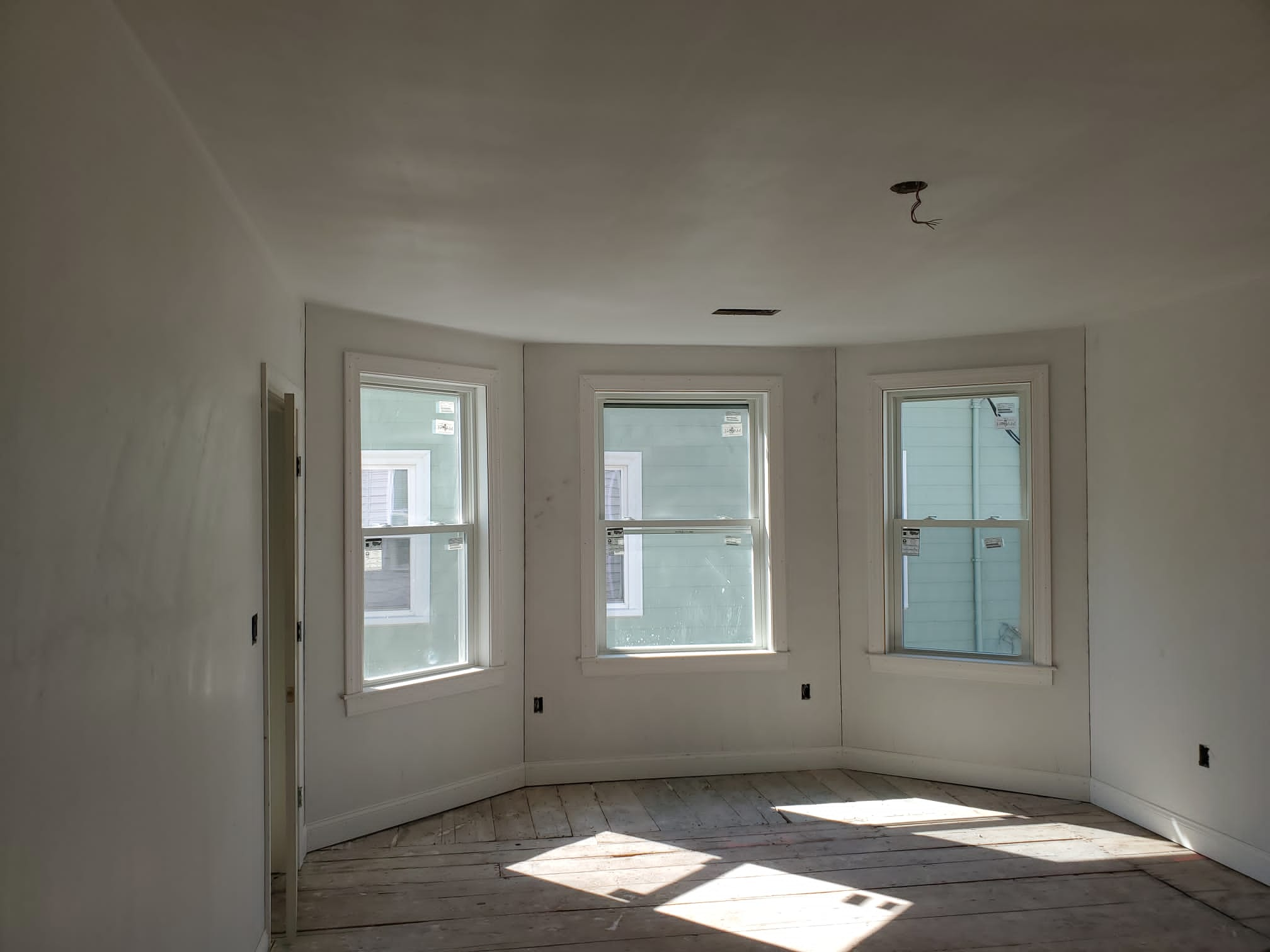
You’ve probably noticed it: certain walls look flawless, others show every roller mark, patch, and ripple the moment afternoon light hits them. The difference usually isn’t the paint, it’s whether the wall was skim coated first. We’re going to explain what skim coating is, when your North Shore home needs it, and how a smooth-wall finish actually gets done by people who do it every week. By the end you’ll know exactly what to ask for.
What Is Skim Coating?
Skim coating means troweling a thin, even layer of finishing compound over a wall, then sanding it to a uniform, glass-smooth surface. Unlike a simple spot patch, a skim coat covers the entire wall so there are no visible transitions between old and new areas. It’s a core part of our plastering and wall-finishing services.
It can be done with joint compound for a smooth drywall finish, or with veneer plaster for an even harder, more durable surface, the same technique behind a true plaster wall.
When Does a Wall Need Skim Coating?
- Removing texture. Knockdown, orange-peel, or popcorn-style textures look dated. Skim coating flattens them into a clean, modern surface.
- Hiding imperfections. Old patches, dents, hairline cracks, and roller-stipple all disappear under a proper skim coat.
- After wallpaper removal. Stripping wallpaper almost always leaves glue residue and torn paper. Skim coating restores a paint-ready wall.
- Upgrading new drywall. A Level 5 skim coat over fresh drywall installation gives the smoothest possible result, ideal for glossy paint and raking light.
- Prepping for premium finishes. Decorative and microcement finishes demand a flawless base, and skim coating creates it.
How the Smooth-Wall Process Works
1. Prep and protect
We mask floors and trim, then clean and prime the wall so the compound bonds properly. Glossy or stained surfaces get extra prep.
2. First skim coat
A thin, even layer is troweled across the entire wall, filling low spots and knocking down high ones.
3. Sand and assess
Once cured, the wall is sanded smooth and inspected under raking light, the same light that exposes flaws after painting.
4. Second coat as needed
Heavily textured or damaged walls usually get a second skim coat for a truly seamless result.
5. Final sand and prime
A final sand and prime leaves the wall perfectly smooth and ready for paint or finish.
Skim Coating as the Base for Premium Finishes
Beyond getting walls paint-ready, skim coating is the essential foundation for any high-end finish. Decorative plaster, Venetian plaster, and microcement all demand a perfectly flat, sound base, because any imperfection underneath telegraphs straight through these thin, hand-applied finishes. A flawless skim coat is what lets the premium finish on top shine. This is why we treat skim coating not as a separate add-on but as the first chapter of a beautiful wall. Whether you’re heading toward a simple painted finish or a dramatic decorative one, the smooth base is what makes everything above it look professional.
Why DIY Skim Coating Usually Disappoints
Here’s the honest part. Skim coating looks simple in videos and almost never goes that way in practice. The hard skills, keeping the trowel angle consistent, feathering edges so there’s no ridge, and sanding evenly without dishing out the wall, take years to develop. The result of a rushed skim coat is a wall that looks worse under light than before. After 14 years, our crews skim coat by feel, and that consistency is what you’re really paying for. For a finished wall that disappears into the room, this is craftsmanship worth hiring out.
Skim Coating Across the North Shore
We skim coat walls and ceilings for homeowners throughout the region, from Peabody to Danvers and beyond. Whether it’s one feature wall or a whole-home refresh before painting, smooth walls are the foundation of a high-end finish.
Skim Coating Walls vs Ceilings
Ceilings deserve their own mention, because they’re where skim coating makes the biggest visual impact and the most demanding work. Popcorn ceilings, that sprayed-on bumpy texture common in older North Shore homes, instantly date a room. Once removed, the ceiling underneath is almost never smooth enough to paint, so a skim coat is what delivers the clean, modern flat ceiling homeowners want. The work is harder overhead, gravity is working against you, but the transformation from textured popcorn to a smooth ceiling is one of the most dramatic upgrades in any remodel.
Walls and ceilings use the same fundamental technique, but ceilings reward experience even more. A flawless smooth ceiling is a clear sign of skilled hands.
What a Level 5 Finish Really Means
You may hear the term “Level 5 finish.” It’s the industry’s highest drywall finish standard, and a full skim coat is what creates it. The drywall finishing scale runs from Level 0 (no finishing at all) to Level 5, where the entire surface receives a thin skim coat over the standard taping and mudding. Why bother? Because under bright, raking, or glossy-paint conditions, anything less than Level 5 can reveal subtle differences between the taped joints and the bare board, a faint photographing effect. Level 5 erases that by treating the whole wall uniformly. If your home has big windows, lots of natural light, or you’re using a satin or semi-gloss paint, a Level 5 skim coat is what keeps the walls looking flawless all day long.
How to Prep for a Skim Coating Project
A little planning makes the work go smoothly:
- Clear the room. The more we can access the walls, the cleaner and faster the result. Furniture gets moved or covered.
- Plan around dust. Sanding creates fine dust. We mask and contain it, but clearing the space helps.
- Decide on the finish first. Knowing whether you’re going matte, satin, or gloss helps us set the right finish level, since glossier paint demands a smoother wall.
- Bundle it smartly. Skim coating before painting or before installing a decorative finish is the natural sequence, and one crew handling both keeps it seamless.
Frequently Asked Questions
What is the difference between skim coating and plastering?
Skim coating is a thin finishing layer applied over an existing surface to make it smooth, while traditional plastering builds a wall up in coats over a base. Skim coating is often done with veneer plaster, blurring the line, but it’s specifically about achieving a smooth final surface.
Can you skim coat over textured walls?
Yes. Skim coating is one of the best ways to flatten textured walls like knockdown or orange peel into a smooth, modern finish without demolition.
How long does skim coating take to dry?
Each coat typically needs to cure before sanding, and most walls need one to two coats. We schedule the work so each layer is fully ready before the next step.
Is skim coating worth it before painting?
If your walls have texture, patches, or imperfections, absolutely. Paint highlights flaws rather than hiding them, so a smooth skim-coated wall is what makes a paint job look professional.
Get Perfectly Smooth Walls
If you’re tired of walls that look great in shadow and rough in daylight, skim coating is the answer. Boston Strong Plastering has delivered smooth, modern finishes across the North Shore for 14 years. Contact us or call (833) 385-4542 for a free estimate.